
- Top User Rated
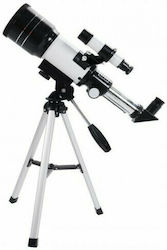
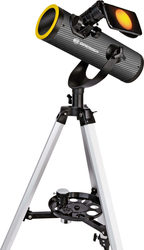
Dwarf Lab 3 Smart Telescope AP 35/150 Robotic with Tripod and Hydraulic Head
Type: Dioptric, Lens: 35mm
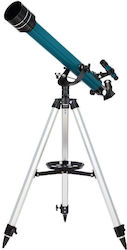
25-75x60 Spotting Monocular Powerful Telescope Waterproof Long Range Tripod Bird Watching Spv T
Type: Dioptric, Lens: 60mm
Offers and Price DropsView more

Filters
- 30-50mm: Refers to small telescopes, suitable for beginners or for observing bright objects such as the Moon and planets.
- 51-70mm: Refers to medium telescopes for more detailed observation of planets and bright nebulae.
- 71-90mm: Refers to telescopes with greater light-gathering capability, ideal for astronomy enthusiasts and observing fainter celestial objects.
- 91-130mm: Refers to powerful telescopes for impressive observation of nebulae, constellations, and details on planets and the Moon.
- Over 130mm: Refers to advanced telescopes, suitable for serious amateur astronomers who want to observe faint objects and galaxies.
- Reflecting: They use a mirror to gather light. Then, with a secondary mirror at a 45-degree angle, they direct the light to the eyepiece.
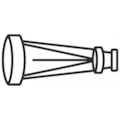
- Dioptric: They use a lens that refracts light and focuses it onto a second lens called the eyepiece, which acts as a magnifier.
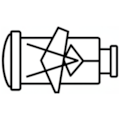
- Catadioptric: They use lenses and mirrors. Light passes through a lens at the front which prepares it, and then, with the help of successive mirrors, the light reaches the eyepiece lens.
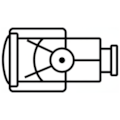
- Robotic: It features a built-in computer and electric motors that allow it to perform functions automatically, without you needing to move it by hand.
- Star Clusters & Large Nebulae: (Focal Length Range up to 700mm) Offers a wide field of view, ideal for observing large areas of the sky, such as nebulae and star clusters.
- Planets & Deep Sky Objects: (Focal Length Range 700-1300mm) Provides good magnification without losing much of the field of view. Suitable for medium-sized objects, e.g. individual star systems or planets with a relatively large surface area.
- Planetary Nebulae & Globular Clusters: (Focal Length Range over 1300mm) Provides high magnification with a narrower field of view, ideal for detailed observation of planets, lunar craters, or small objects such as distant galaxies.
- Altazimuth: The simplest option. It moves like our head, up-down and left-right. It is ideal for quick tours of the stars or nature, as it is easy and intuitive to use, just like a classic camera tripod.
- Equator: Designed to "lock onto" stars, following their curved path across the sky. Although it requires a small adjustment at first, it allows you to track a star along an imaginary arc, moving only one lever without ever losing it.