One of the best motherboards for an AM4 system (relevant now, as DDR5 RAM / AM5 system prices are forcing many people to build on AM4, which is more affordable). It’s a pleasure to build on. Plenty of room for bulky CPU air-cooling systems, as the RAM slots are quite far from the processor, and also for installing large AIO water blocks with displays (as in my case). It has two slots, both with their own thermal-pad heatsinks, for NVMe (M.2) (warning! it does not support PCIe 5; many PCIe 5 NVMe drives are now available on the market, and if you install one, it will run at PCIe 4). This particular one is version 1.6 (even though it says 1.0 in the description, so you don’t have to look it up for the BIOS). It has 12+2 power stages compared to similar ones such as the TUF Gaming (8+2). It has both 5V and 12V RGB headers. It also has a kind of AMP (amplifier) built into the sound card (which is good compared with other built-in motherboard sound cards that are worthless) and a noise guard to prevent the motherboard from causing interference in headphones connected to the rear port. I hadn’t paid much attention to this, as I usually use external sound cards. But it just so happened, and I think it’s worth sharing: a new headset arrived before a sound card I had ordered had a chance to arrive. For fun, I connected the headset to the motherboard to see what would happen, and it performed very well, without interference and with satisfactory volume. We’re talking about the Beyerdynamic DT 770 PRO. To understand the difference, these are 250 ohms, while motherboard sound cards usually support up to 30 ohms. Well done, Gigabyte, I hadn’t given you enough credit.
One downside that really made things difficult for me: all the RGB headers and SYS_FAN slots (where the fan cables connect) are located toward the rear of the motherboard. Don’t start building on it without fan cable extensions. THEY’RE NECESSARY. I built in an Antec Flux Pro Noctua Edition, and if the PC case hadn’t included them, I would have lost two days waiting for extensions (and I still bought and added some the following week to give the cables more room). The GPU slot is reinforced with metal so the graphics card fits more securely and doesn’t sag over time. A good initiative, but it’s not worth taking the risk; newer GPUs in particular are large, so it’s a good idea to use an additional support system—there are plenty available.
SYSTEM:
Antec Flux Pro Noctua Edition
AMD Ryzen 7 5800X3D 10 Years Anniversary Edition CPU
GIGABYTE AORUS Elite AX V2 rev. 1.6 motherboard
Seasonic PRIME TX-1600 Noctua Edition PSU
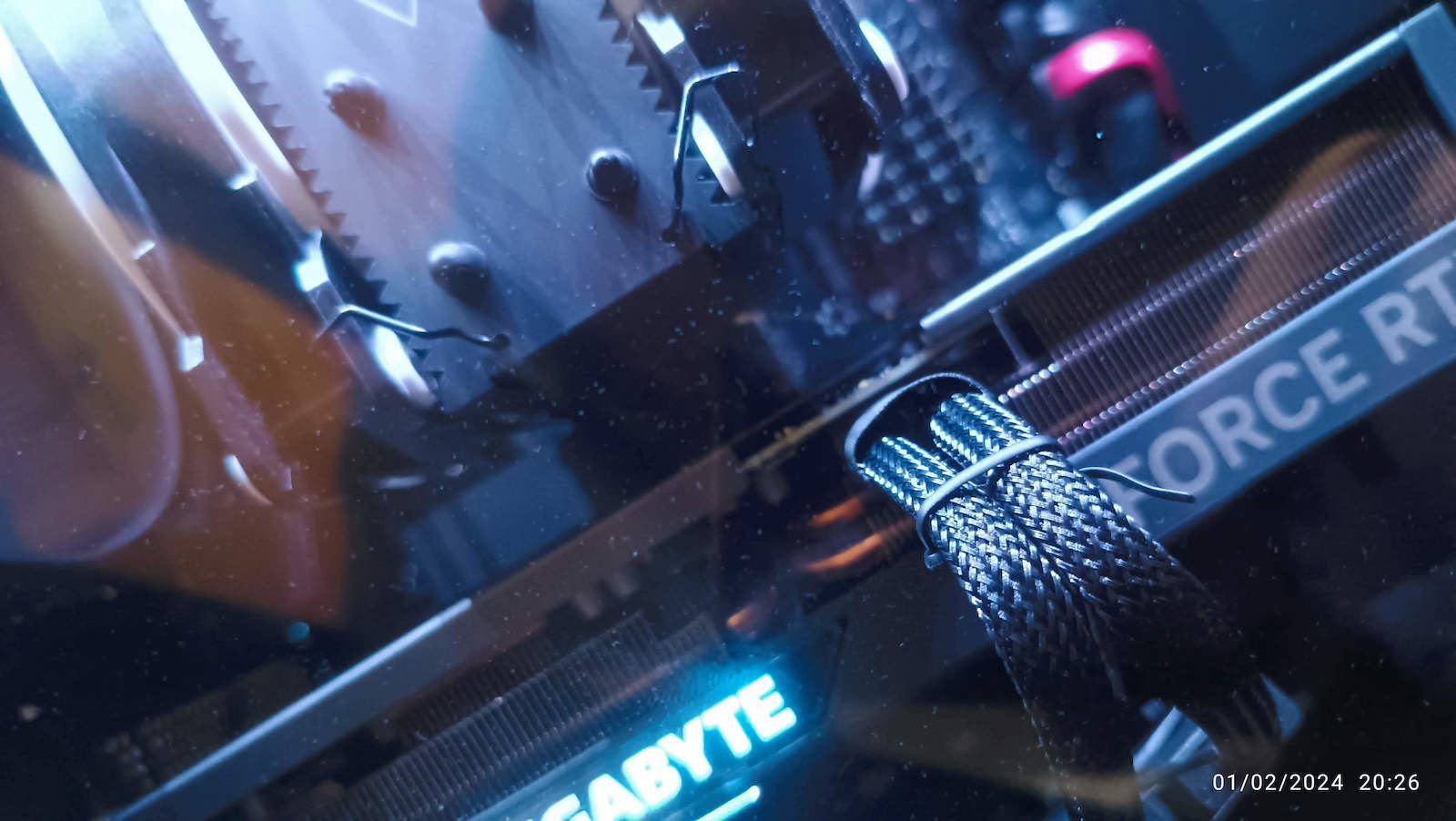
Gigabyte GeForce RTX 5080 16GB GDDR7 AORUS Master GPU
Thermalright Peerless Vision 360 AIO (top mount—exhaust)
Thermal Grizzly KryoSheet (instead of thermal paste)
PC fans: NF-A14x25 G2 (three front + one back—exhaust) and
NF-A12x25 G2 (two bottom)
Από τις καλύτερες μητρικές για σύστημα AM4 (επίκαιρο καθώς οι τιμές ram DDR5 / Σύστημα ΑΜ5 αναγκάζουν πολλούς να χτίσουν σε ΑΜ4 που είναι πιο προσιτό οικονομικά). Eίναι ευχαρίστηση να χτίζεις πάνω της. Πολύς χώρος για ογκώδη συστήματα αερόψυξης επεξεργαστή καθώς τα ram slots βρίσκονται αρκετά μακριά από τον επεξεργαστή, αλλα και για τοποθέτηση μεγάλων waterblock ΑΙΟ που φέρουν οθόνες (όπως στη δική μου περίπτωση). Διαθέτει δυο slots με δικες τους thermal pad ψυκτρες ΚΑΙ οι δύο, για NVME (M.2) (προσοχή! δεν υποστηρίζει PCiE 5, Κυκλοφορούν πολλές NVME pcie5 στην αγορά πλέον, αν τοποθετήσετε τέτοια θα τρέχει σαν PCiE4). Η συγκεκριμένη αποτελεί version 1.6( παρόλο που λέει 1.0 στην περιγραφή, για να μη το ψάχνετε για τα BIOS.). Διαθέτει 12+2 power stages σε σύγκριση με αντίστοιχες όπως η tuf gaming (8+2). Διαθέτει σετ και 5v και 12v rgb headers. Eνσωματομένο έχει ένα είδος AMP (amplifier) στην κάρτα ήχου (η οποία είναι καλή σε σχέση με άλλες ενσωματωμένες μητρικών που είναι για πέταμα) και noise guard για να μη κάνει παράσιτα η μητρική στα ακουστικά όταν συνδέονται στη πίσω θύρα. Αυτό δε το είχα δώσει πολύ σημασία καθώς συνήθως χρησιμοποιώ εξωτερικές κάρτες ήχου. Έτυχε όμως και νομίζω αξίζει να το μοιραστώ να έρθει καινούργιο headset χωρίς να προλάβει να έρθει μια κάρτα ήχου που είχα παραγγείλει. Για πλάκα συνδεσα το headset στη μητρική να δω τι θα γίνει και το παίζει σε πολύ καλή απόδοση χωρίς παράσιτα και με ικανοποιητική ένταση. Μιλάμε για τα Bayerdynamics DT770 PRO. Για να καταλάβετε τη διαφορά, αυτά είναι 250 Ohms και οι κάρτες ηχου των μητρικών υποστηρίζουν συνήθως μεχρι 30 ohms. Λοιπόν μπράβο σου gigabyte και δε σου το χα.
Ενα μείον που πραγματικά με δυσκόλεψε, όλα τα rgb headers και τα sys.fan slots (που συνδέονται τα καλώδια των fans) βρίσκονται προς το πίσω μέρος της μητρικής. Μη ξεκινήσετε να χτίζετε πάνω της χωρίς επεκτάσεις καλωδίων ανεμιστήρων. ΧΡΕΙΑΖΟΝΤΑΙ. εγώ έχτισα μεσα σε antec flux pro noctua edition και αν δεν είχε μεσα το pc case από μόνο του θα έχανα δυο μέρες να περιμένω επεκτάσεις (και πάλι πήρα και πρόσθεσα για να είναι πιο άνετα τα καλώδια την επόμενη εβδομάδα). Το slot της gpu είναι επενδυμένο με μέταλλο για να κουμπώνει καλύτερα η μητρική και να μη γέρνει με τον καιρό. Καλή πρωτοβουλία αλλά δεν αξίζει να το ρισκάρει κανείς, ειδικότερα οι πιο καινούριες gpu είναι μεγάλες οπότε καλό είναι να χρησιμοποιήσει κανείς επιπλέον σύστημα στήριξης, κυκλοφορούν πολλά.
ΣΥΣΤΗΜΑ:
Antec Flux Pro Noctua Edition
AMD Ryzen 7 5800X3D 10Years Anniversary Edition cpu
GIGABYTE aorus elite ax v2 rev.1.6 motherboard
Seasonic PRIME TX-1600 Noctua Edition psu
Gigabyte GeForce RTX 5080 16GB GDDR7 Aorus Master gpu
Thermalright Peerless Vision 360 AIO (top mount- exaust)
Thermal Grizzly KryoSheet (αντί thermal paste)
pc fans: NF-A14x25 G2 (three front + one back- exaust) και
NF-A12x25 G2 ( two bottom)