


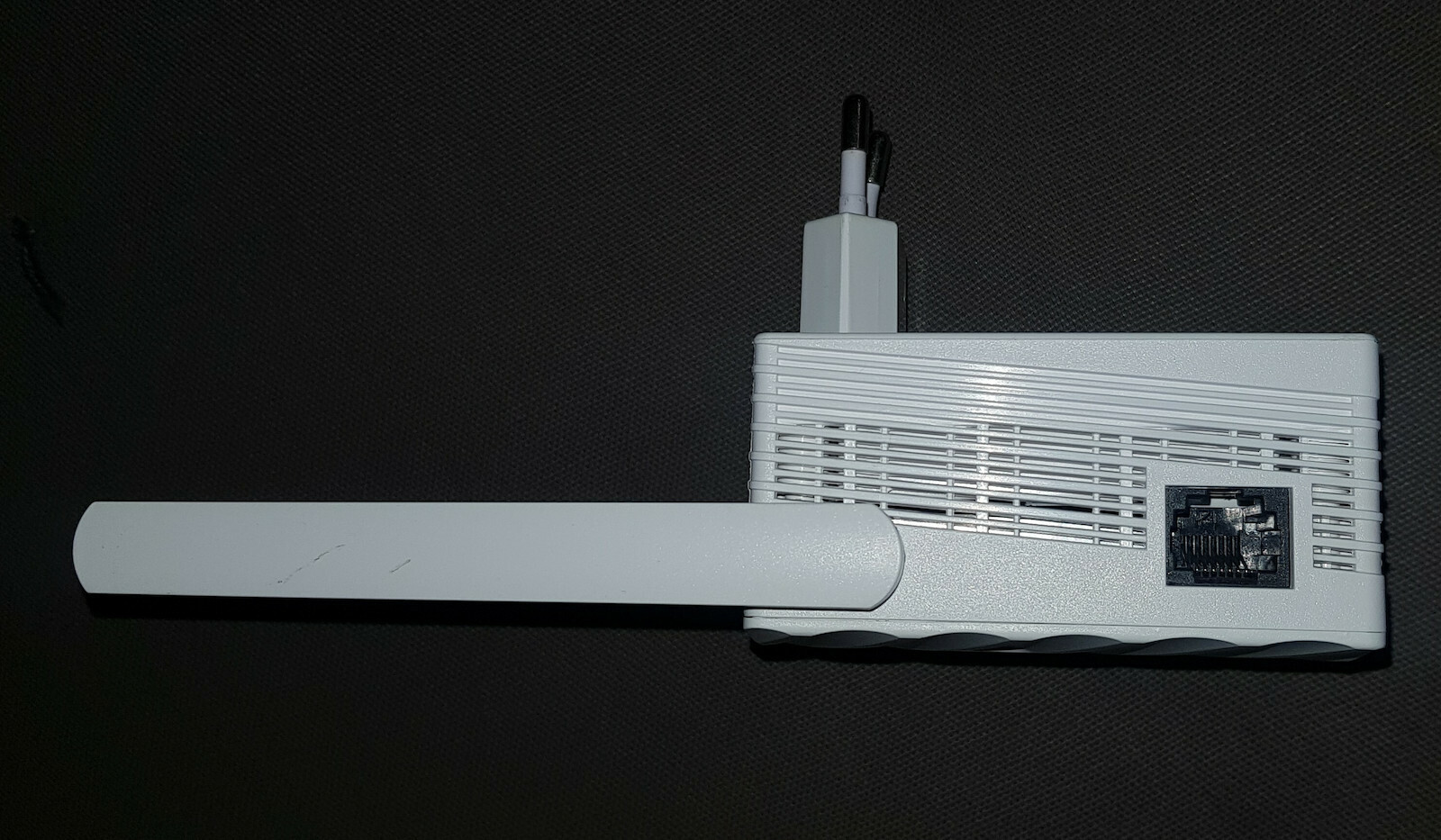
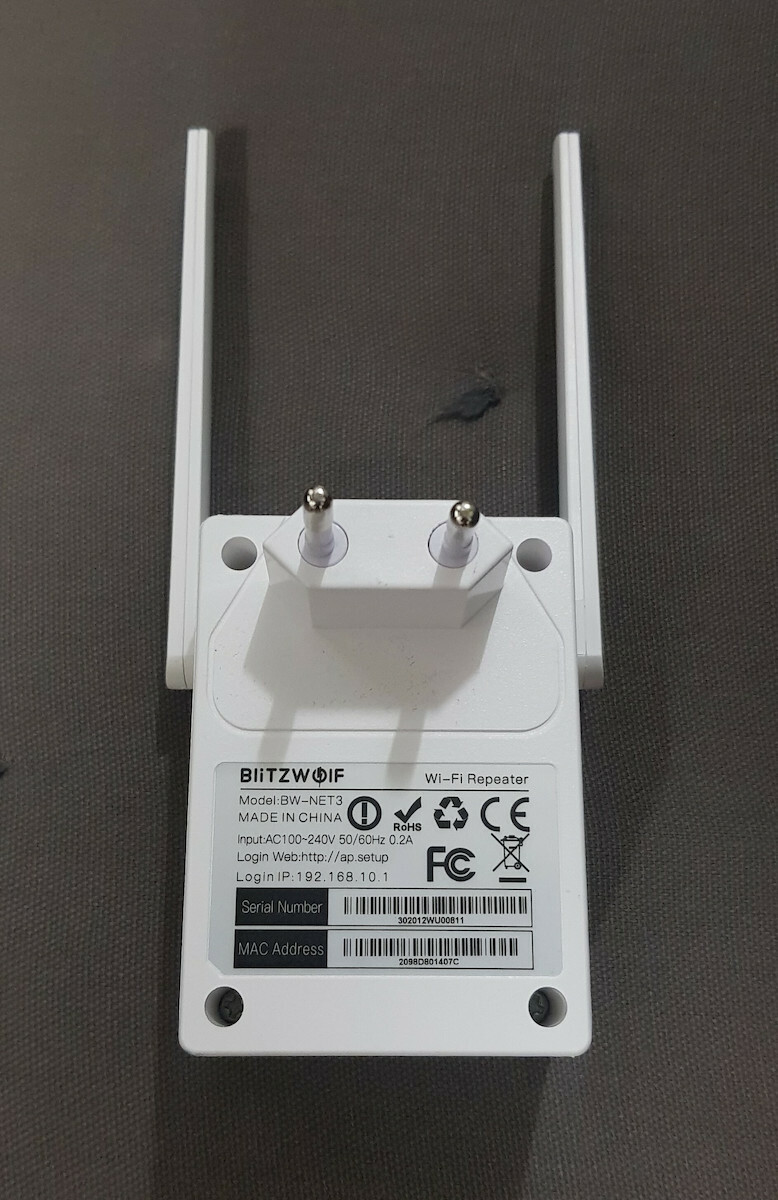
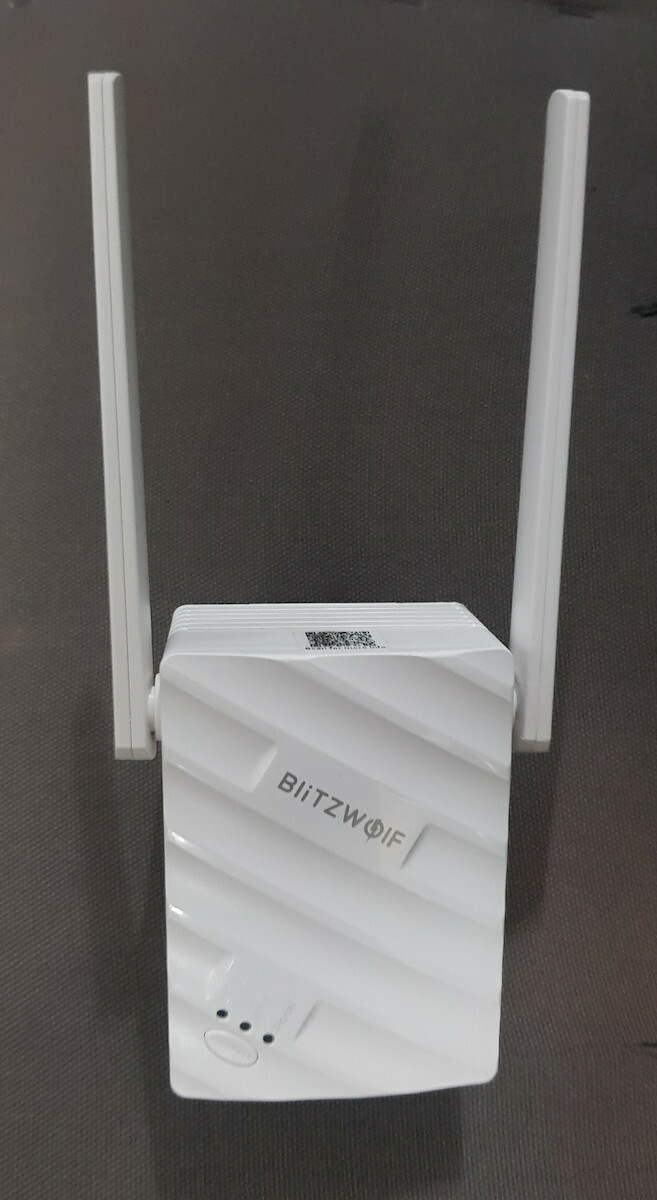
The WiFi Extender from BlitzWolf broadcasts signals on two frequencies. It offers higher speeds compared to single-frequency extenders and allows connection of more devices. The 2.4Ghz frequency is the most widespread and, due to its long range, is often congested by neighboring Wi-Fi signals, further complicating device communication. The 5Ghz frequency provides higher speed than 2.4Ghz but is more sensitive to obstacles (e.g., walls) that reduce its range. This difference, along with its more limited use, helps it have fewer interferences from other networks. The repeater can offer up to 1200Mbps in total to the connected devices. In practice, the actual speed shared among devices is closer to 200Mbps. For reference, a high-resolution 4K movie requires about 25Mbps. The speed each connected device will have depends on the distance, obstacles, the number of other connected devices, the number of other networks in the same area, etc. It is of Wi-Fi 5 generation, the most widespread Wi-Fi standard, which can meet the needs of most users for now. There is also the next generation, Wi-Fi 6, which offers the ability to connect many more devices to accommodate the ever-increasing number of smart devices in a home. Connection via ethernet cable offers a speed of 100Mbps, which is sufficient to cover all needs, e.g., a high-definition 4K movie requires about 25Mbps.


The WiFi Extender from BlitzWolf broadcasts signals on two frequencies. It offers higher speeds compared to single-frequency extenders and allows connection of more devices. The 2.4Ghz frequency is the most widespread and, due to its long range, is often congested by neighboring Wi-Fi signals, further complicating device communication. The 5Ghz frequency provides higher speed than 2.4Ghz but is more sensitive to obstacles (e.g., walls) that reduce its range. This difference, along with its more limited use, helps it have fewer interferences from other networks. The repeater can offer up to 1200Mbps in total to the connected devices. In practice, the actual speed shared among devices is closer to 200Mbps. For reference, a high-resolution 4K movie requires about 25Mbps. The speed each connected device will have depends on the distance, obstacles, the number of other connected devices, the number of other networks in the same area, etc. It is of Wi-Fi 5 generation, the most widespread Wi-Fi standard, which can meet the needs of most users for now. There is also the next generation, Wi-Fi 6, which offers the ability to connect many more devices to accommodate the ever-increasing number of smart devices in a home. Connection via ethernet cable offers a speed of 100Mbps, which is sufficient to cover all needs, e.g., a high-definition 4K movie requires about 25Mbps.
Technical Specifications
- Ethernet Ports
- 1
- LAN speed
- 100 Mbps
- USB
- Without
- Number of Antennas
- 2
- Passthrough
- No
Wi-Fi Features
- Frequency
- Dual Band (2.4 & 5GHz)
- Maximum WLAN Speed
- 1200 Mbps
- Wi-Fi Generation
- Wi‑Fi 5
- IEEE Networking Standards
- 802.11 b/g/n, 802.11a, 802.11ac
Features & Functions
- Mesh
- No
- WPS Button
- Yes
Installation
- Socket
- Yes
- Desktop
- No
- Outdoor
- No
Important information
Specifications are collected from official manufacturer websites. Please verify the specifications before proceeding with your final purchase. If you notice any problem you can report it here.