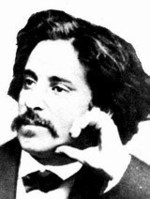
Paul Lafargue
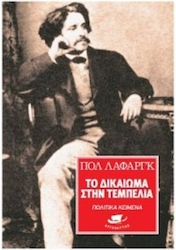
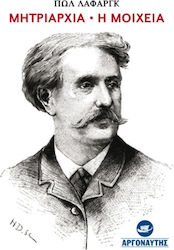
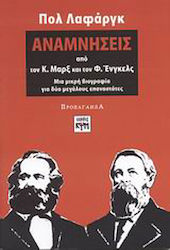
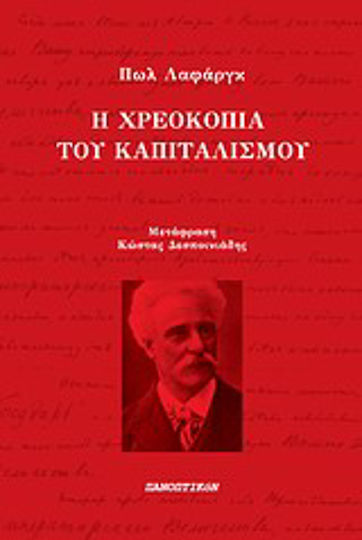
Paul Lafargue was born in 1842 in Santiago, Cuba, to wealthy French-Jewish parents involved in coffee cultivation. In 1851, his family returned to Bordeaux, France. The young Paul completed high school in Toulouse in 1859 and enrolled in the medical school of Paris. The era's climate favored the study and radicalization of his political views. Lafargue embraced Proudhon's ideas on socialism and joined the socialist movement. In February 1865, he met Karl Marx in London, who left a strong impression on him. This meeting led to his acquaintance with Marx's daughter, Laura, whom he married in 1868, with Engels as the best man. That same year, they had a frail son who, after much suffering, passed away in 1872. Meanwhile, in 1867, Lafargue became a member of the International and was appointed its secretary for Spanish affairs. With the outbreak of the Franco-Prussian War in 1870, his anti-Bonapartism intensified, and his socialist ideas became more radical. After the defeat of the Paris Commune, Lafargue sought refuge in Spain, where the battle between Marxists and anarchists within the International was raging. Despite the "Proudhonism" attributed to him by Marx, Lafargue zealously fought against the anarchists. Later, his disdainful remarks about Spanish anarchists provoked the indignation of the great Italian anarchist Malatesta, who challenged Lafargue to a duel—which never took place. In London, he continued his fight against the anarchists, which resulted in a Pyrrhic victory for the Marxists: the expulsion of Bakunin and the organizations supporting him, the transfer of the First International's headquarters to New York, and its eventual dissolution. In 1880, he returned to France and published "The Right to Be Lazy" in installments in the newspaper "L'égalité." Lafargue's work divided and embarrassed socialists because, while his writings on the economy and the deplorable living conditions of workers aligned with Marx's, who was the ultimate authority for them, and Lafargue was a well-known political activist and Marx's son-in-law, his approach to the subject was unorthodox: labor parties worldwide still demand the right to work. Subsequently, Lafargue, along with Jules Guesde, co-authored the economic program of the French Workers' Party, which, among other things, demanded the establishment of a day of rest per week for all workers, the prohibition of child labor under 14, and the limitation of adult work to eight hours (a day of rest was eventually established in France in 1906, and the eight-hour workday in 1909). On November 26, 1911, Paul and Laura Lafargue committed suicide by injecting themselves with cyanide, although, according to friends and acquaintances, they were in excellent physical and mental condition. In the note Lafargue left behind, he wrote: "Healthy in body and mind, I commit suicide before the relentless old age, which will strip me of the pleasures and joys of life one by one and will take away my physical and mental powers, crushes my will and makes me a burden to myself and others." For years, I have promised myself not to live past seventy [...].
"Long live communism"
"Long live international socialism"
The suicide of the Lafargue couple was met with enthusiasm by the anarchists of Paris, while it once again divided the socialists, some of whom accused them of "desertion from the class struggle." Lenin, who delivered a ten-minute speech at their funeral, did not mention the manner of the couple's death even once.
 Biographies & Memoirs