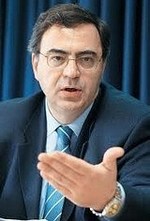
Nikos CHristodoulakis
Nikos M. Christodoulakis specializes in fiscal policy, public debt, and development issues. He is a Professor of Economic Analysis at the Athens University of Economics and Business (AUEB) and a Research Associate at the Hellenic Observatory of the London School of Economics. He teaches Macroeconomics, History of Economic Theories, and International Economics.
Born in 1952 in Crete, he initially studied at the National Technical University of Athens. As a student, he actively participated in the anti-dictatorship movement—he was a member of the coordinating committee during the Polytechnic uprising in 1973—and during the post-dictatorship period, he was a member of the reformist left. After 1980, he continued his studies at the University of Cambridge, where he obtained a Ph.D. and worked in the Department of Applied Economics until 1986. He then worked as a researcher at the European University Institute in Florence, the Tinbergen Institute in Amsterdam, and the London Business School, and served as a visiting professor at Charles University in Prague and the University of Cyprus. From 1992 to 1995, he was elected Vice-Rector at the Athens University of Economics and Business. He has published numerous papers and articles in international journals on economic policy, fluctuations, and development, as well as two books ("The New Landscape of Development," 1998, "The Pendulum of Convergence," 2006). From 1993 to 1996, he served as Secretary General for Research and Technology and later as an economic advisor to Prime Minister Mr. K. Simitis. In September 1996, he was appointed Deputy Minister of Finance responsible for the budget and public debt management during the critical period of Greece's entry into the Economic and Monetary Union (EMU). During his tenure, new salary scales were implemented for the entire public sector, and the Organization for the Care of Public Employees and Pensioners was established. The bond market was modernized, and new tools for active public debt management were introduced, resulting in a 10% reduction of GDP in three years. In April 2000, he was appointed Minister of Development, responsible for the sectors of Energy, Industry, Tourism, Trade, and Research. During his tenure, the responsibilities of the Competition Commission were upgraded, the first licenses for private electricity producers were granted, the hotel sector in Athens was liberalized, the framework for industrial activity in Attica was changed, and the domestic and commercial use of natural gas began in major cities. In October 2001, he became Minister of Economy and Finance until the March 2004 elections. In the second half of 2002, he chaired the Eurogroup of Eurozone Ministers. He served as a Member of Parliament and a member of the PASOK Parliamentary Group between 2004-2007.


 History Books
 Kids' General Knowledge & Trivia Books
 Business Books
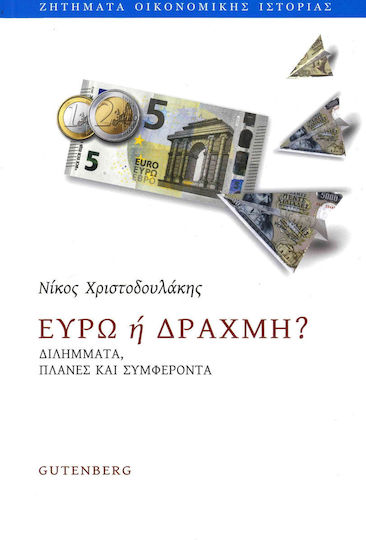 Business Books